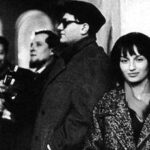
Torino (periodo di attività 1957-1963)
By Chiara Ferrari (Università di Bologna)
Cantacronache 1958–1962. Politics and Protest in Music
First published in full as “Cantacronache 1958–1962. Politics and Protest in Music” in Storicamente, 9 (2013), no. 42. DOI: 10.12977/stor495
By Chiara Ferrari (Università di Bologna)
From 1958 to 1962, Michele Luciano Straniero, Sergio Liberovici, Emilio Jona, Fausto Amodei, and Margherita Galante Garrone (Margot) founded and developed Cantacronache in collaboration with writers and poets such as Mario Pogliotti, Franco Fortini, Italo Calvino, Umberto Eco, and Gianni Rodari. The group consisted of young people who viewed the country from a critical and nonconformist perspective, denouncing, protesting, and hoping to reawaken within the collective memory events and moments of social and political history. They painted a very different picture from the dazzling, carefree Italy depicted in popular light music during those years of the full-blown “economic miracle.”
The group’s main founders were intellectual and cultured individuals, scholars and artists.[1] All of them had other careers, though Sergio Liberovici was a cultured and refined musician, part of the professional music world.[2] The inspiration to create Cantacronache came to Liberovici after a trip to East Germany. There he came into contact with Brecht’s Berliner Ensemble, which inspired him to try writing songs of “critical-contingent value”—that is, songs that would serve as a mirror to reflect reality and function as a critique of the political, social, and cultural system; in short, songs that would be “a true instrument of social condemnation” (Peroni 2001, 44).
Indeed at the time, as Amodei notes, “Straniero and Liberovici thought it was worth creating an Italian repertoire that could stand on equal footing with the repertoire of the French chansonniers—Brassens, Ferré—or with the German repertoire of Weill, Eisler, and Brecht.”[3] These were the models that inspired the group: “German cabaret songs of the interwar periodand French socially conscious poetic songs” (Rolf-Ulrich 1971, 276).
Starting in the fall of 1957, the new “collective” performed in the salons of Turin’s bourgeoisie including Giulio Einaudi, Carlo Galante Garrone, Luciano Foà, and Elsa de’ Giorgi. They captured an audience of intellectuals, but also a working-class audience: “At first,” Amodei explains, “we performed in the posh left-wing salons of Turin; they even sent us to Rome for a show. Then we decided to go sing at the Festivals of Unity or in community centers.”[4] “I remember,” says Jona, “at Parco Lambro in Milan, meeting Togliatti in ’59 or ’60. We sang our songs before he spoke.”[5]
On May 1, 1958, their first public performance took place, as part of the CGIL parade in Turin. Cantacronache’s songs “Dove vola l’avvoltoio?”, “La gelida manina,” and “Viva la pace” were played over loudspeakers from a gramophone mounted on the union truck during the parade organized to mark the end of the election campaign.
Between 1958 and 1962, Cantacronache produced eight albums, three “Cantafavole” (nursery rhyme) records for children based on texts by Calvino, Fortini, Rodari, and Jona; two poetry anthologies featuring the voices of Vladimir Mayakovsky and Nazim Hikmet; two “Cronaca” records titled“Firenze 1944” and “No al fascismo”; three records of popular Italian protest songs, a record of 19th-century Hungarian songs inspired by Garibaldi (Viva Garibaldi), a series on the songs of the Mexican Revolution and the liberation movements in Cuba, Angola, and Algeria, on the Spanish Civil War and the resistance against Francoism, as well as on Congolese and European resistance movements. They also produced an album on the history of the USSR through song (Deregibus 2010, 88).
At the time, there was an abundance of songs whose lyrics invited listeners to take their mind off things, to not get upset if something went wrong. This “sing it away” mentality was nothing more than a denial and dehistoricization of problems. The essay, which examined the historical and structural reasons behind Italian musical malpractice, looked to distant history in order to reflect on the present reality. Cantacronache, for example, saw the Sanremo Festival, inaugurated in 1951, as the headquarters of a well-equipped center for the dissemination of new products of mediocre quality, “songs to whistle in the bathroom for the rest of the year” (Innocenti 1995, 191).
Hence the project of the young Torinese artists: to renew Italian song through commitment and a focus on everyday reality. Both Stefano Pivato (2005) and Gianni Borgna (1985; 1980; 1998) agree that the Turin movement acted as a counterpoint to the musical context of the Sanremo Festival. Sanremo was disconnected from reality and centered on the narrative of an Italy that was still predominantly archaic, whose founding myths drew largely on the age-old triad of God-Fatherland-Family for an ever-wider audience, which was shifting from radio to television, eager to conquer new realms of escapism and earn its well-deserved leisure during the years of the economic boom.
Certainly, the musical landscape from 1958 onward was a constantly shifting kaleidoscope: teenagers drove the market, often favoring musical genres from America, the new “Promised Land” (Castaldo 1994). Rock ’n’ roll was all the rage in arcades, bars, and nightclubs, blaring from jukebox speakers. In Italy, it was sung by the “urlatori”—singers with shrill, wild voices who screamed anger, vitality, or despair at the top of their lungs. The urlatori, with their sexual exhibitionism, their vitality, and their ostentatious nonconformity, were the faithful mirror of a country that was gradually yet rapidly breaking free from the narrow perspective of provincialism and ruralism. It was an Italy that aspired more than anything else to the comforts, well-being, and escapism of opulent society, and whose model was America (Borgna 1998, 83).
Cantacronache, on the other hand, was the “alternative” song: outside commercial circuits, going against the grain, lacking the following of a younger audience—the new music consumers—, decidedly out of fashion. Critical of the pop music industry, Cantacronache turned songs into a battlefield, but its primary objective was to challenge the political and social system of the new prosperous Italy.[6]
The group’s poetic manifesto, “La canzone dei fiori e del silenzio” (“The Song of Flowers and Silence”), clearly expressed their aversion to the evasive lyrics and easy rhymes of Sanremo. The songwriters refused to remain silent about the social issues and injustices affecting ordinary people; they wouldn’t settle for singing about “woods and flowers, happy loves.” They wanted to speak about poverty and labor, about life, “even if it has gray and hard days, about loves, even if they are sad and dark”—about reality.
Labor in the South: “La zolfara” and “white-collar murders”
A song like “La zolfara” (“The Sulfur Mine”) offers a glimpse into the heart of the Cantacronache’s poetics and their broad perspective on social issues. It stems from a news story that was covered in that period: it was Sicily in 1958, and eight workers died in the Gessolungo sulfur mine. No one seemed to care much; the state tended to forget that people could still die on the job in Italy. Shortly before, in Ribolla as well, some miners had been buried in the Grosseto mine, and this accident had become the inspiration for a novel, La vita agra by Luciano Bianciardi.
“La zolfara” is a defense of those workers forced to endure precarious and deadly conditions. Only a vengeful Jesus Christ can set things right and restore the compromised order: in fact, it is he who saves the dead miners by offering them a better life in paradise, after destroying the mine (a symbol of injustice) with a bolt of lightning. The song reflects Straniero’s Catholic upbringing.[7] His voice, which narrates without interpreting, offers an objective and almost detached view of the event, and for this reason has the merit of making the description feel highly realistic.
Labor in the North: “Canzone triste,” workers’ struggles, and women at work
“Canzone triste”[8] (“Sad Song”) presents a different nuance on the theme of labor. Work shifts create lives that run parallel and never intersect: those who return in the evening and leave again in the morning, those who return in the morning to be back at work in the evening. Thus, only a moment remains for the couple in the song to share a fleeting kiss or a cup of coffee. “We wanted to depict the working-class condition—what wages are like, exploitation, the assembly line,” explains Jona.
After all, “Il ratto della chitarra” (“The Guitar Abduction”) is also a statement of this kind. In the song, Amodei tells the story of his guitar being confiscated—a guitar that the police had classified as “communist” because “it sang without fear / verses a bit insolent / in defiance of censorship / against the bosses and the powerful.”
Cantacronache also wrote some anticlerical songs like “La guerra era finita,” which tells the story of a couple who had decided to marry in a civil ceremony: their union had grown stronger over the years despite the many misadventures and misfortunes they had faced—strikes, the war, the death of a son on the front. But their greatest misfortune was that of being unbelievers:
We are illicit spouses / we live in sin / our love is ignoble / life has sullied us. / To have the right / to a little respect / we had to unite / before the altar boy / and from the altar the priest / would have blessed us. / He must bless: / men and pennants. [9]
The song, however, concluded with a profound reflection on love, which is “the power of a smile” and which will live on in the hearts of the couple’s children on earth and in heaven.
Italian politics in July 1960: For the Dead of Reggio Emilia
The song “Per i morti di Reggio Emilia ” (“For the Dead of Reggio Emilia”) addresses the political situation into which Italy plunged in 1960; or rather, Italy as it was in 1960, on the cusp of the boom years. Continuity, in the transition from fascism to post-fascism, is a credible interpretation of the type of state that consolidated itself in those years, when Ferdinando Tambroni, first Minister of the Interior and then Prime Minister from April 1960, elected with the support of the Italian Social Movement (Longo 1970; Jona and Straniero 1995; Crainz 2005), played a leading role in this process.
In Reggio Emilia, the Chamber of Labor had called a political strike for the afternoon of July 7. Suddenly, police and Carabinieri vans arrived from all the access roads to the square and began dispersing the crowd with water cannons spraying colored water. Then tear gas canisters were fired, and finally live rounds aimed at chest height. Five young people were hit; four died immediately, and one died that evening in the hospital. About thirty people were also injured, twenty of them seriously. The mayor intervened, trying to stop the carnage, and at that point the shooting ceased.
The memory of the tragedy is enshrined in the lyrics and music of a song that has become a monument—a place of remembrance—around which people gather to recall names, people, and events from the history of the partisans. It is no coincidence that the song consciously echoes the words of other popular partisan songs, serving to reconnect a thread: there is “Fischia il vento”: “The song we have to sing is the same: broken shoes, yet we must go,” while the finale quotes “Bandiera Rossa.”
The Resistance, in the company of Italo Calvino
“Central to the Torinese group’s experience is recovering the memory of the Resistance […] against the attempts at rewriting and oblivion that the conservative culture of the 1950s wrought upon the partisan experience” (Pivato 2005, 208 and Pivato 2002, 145), but also due to the “need to confront the shift in Italian politics” (Peroni 2005, 47) during the return of a pro-fascist government.
Cantacronache dedicated several songs to this theme, some of which brought the aspect of memory innovatively to the forefront, in the desire to remember and reaffirm that experience of struggle. It was a powerful awakening. “It must be said,” Straniero wrote, “that in the late 1950s, talking about the Resistance was […] almost a crime” (Jona and Straniero 1995, 67).
“Partigiani Fratelli Maggiori” (“Big Brother Partisans”) is, in fact, one of the songs that explicitly addresses the theme of remembrance: “If we look in history books / if we search through grand speeches made of thin air / we cannot find your memory.”[10]
But among the most evocative, one cannot fail to mention “Partigiano sconosciuto” (“Unknown Partisan”), [11] the author of whose lyrics is listed as Anonymous. Sergio Liberovici, in fact, set to music an anonymous poem, handwritten on April 25, 1945, at the site in Modena where a partisan had been shot. Later, the name of the author—or rather, the authoress—of the text became known: it was the Modena-based partisan Claudina Vaccari.
Interest in the theme of the Resistance led Cantacronache to focus on the political and social songs of other countries in revolt, such as Algeria, which from 1954 to 1962 was fighting its revolution for independence against France.
The album Canti della rivoluzione algerina (Songs of the Algerian Revolution) can be considered the first audio documentation in Europe of Algerian war songs. Straniero himself, one of the album’s curators and author of “Canzone del popolo algerino” (“Song of the Algerian People”) wrote:
For my generation, the Algerian War had the same significance that the Spanish Civil War had for our fathers, and the Vietnam War for younger people: it made us discover oppression and torture, gave us the moral certainty and enthusiasm of being on the right side, helped us understand the dynamics of history—it was what is called an “awakening” that helped us become adults. (Straniero, Rovello 2008, 20)
On the subject of the Resistance, Cantacronache found a sound partner in Italo Calvino. In the song “Oltre il Ponte” (Beyond the Bridge), written by Calvino, the partisan story becomes a legacy of values and ideals to be passed on to a new generation of young people in their twenties. The theme is rendered with delicate tones, lightness, and simple imagery: a bridge is the symbol that divides war from peace, life from death, and the hope that love will triumph over every other attempt at destruction.
It was also Calvino who in 1958 wrote “Dove vola l’avvoltoio? ” (“Where Does the Vulture Fly?”), a song that foreshadowed in Italy the pacifist sentiment that would explode a few years later, for example in Fabrizio De André’s song “La guerra di Piero” (1964) and in Bob Dylan’s pacifist anthem “Blowing in the Wind ” (1963).
CONCLUSIONS
Cantacronache remains to this day an innovative and unique experience, a turning point in the history of Italian song, not only for having contributed to the birth of the singer-songwriter genre and songwriting—by writing, setting to music, and singing their own songs, having found no professional singers willing to do so—and thereby preserving a certain creative freedom. At its core was the idea of creating a new system for the production and enjoyment of art that would include, in its transformative process, the audience—not as a formless mass, but as a collection of individuals, people with whom to engage and share an interest in the realities of life. Along with its educational and ethical value, the song also required a renewed mode of performance on the part of the performer: a simple and natural vocal style which, like the orchestration, was devoid of elaborate arrangements. The song became literature and literature became song, united with painting and graphic design, as shown by the drawings found among their theoretical writings, or the covers of their records, or the stage designs of their shows. A total work of art, one might say.
BIBLIOGRAPHY
Bentini Michele et al. 2011, Cantacronache 1958-1962: politica e protesta in musica, a cura di Michele Bentini, Sandra Cassanelli, Liviana Davì, Elisa Dondi, Rossella Fabbri, Chiara Ferrari, Sara Macori, Alice Tonini, DVD, Master in Comunicazione Storica dell’Università di Bologna, in collaborazione con l’Istituto Storico Parri Emilia Romagna.
Bianciardi Luciano 1962, La vita agra, Milano: Rizzoli.
Borgna Gianni 1998, L’Italia di Sanremo. Cinquant’anni di canzoni, cinquant’anni della nostra storia, Milano: Mondadori.
Calvino Italo 1947, Il sentiero dei nidi di ragno, Torino: Einaudi.
Carpitella Diego, et. al. 1978, La musica in Italia, Roma: Savelli.
Castaldo Gino 1994, La Terra Promessa. Quarant’anni di cultura rock (1954-1994), Milano: Giangiacomo Feltrinelli Editore.
Crainz Guido, 2005, Storia del miracolo italiano, Roma: Donzelli.
Deregibus Enrico 2010, Dizionario completo della canzone italiana, Firenze: Giunti.
Innocenti Marco 1995, L’Italia del dopoguerra 1946-1969. Come eravamo negli anni dal boogie-woogie alla dolce vita, Milano: Mursia.
Jona Emilio 1958, Cantacronache, Torino: Edizioni Italia Canta.
Jona Emilio, Straniero Michele Luciano (eds.) 1995, Cantacronache. Un’avventura politico musicale degli anni Cinquanta, Torino: Scriptorium & DDT Associati.
Pasolini Pier Paolo 1960, 7 luglio 1960, Roma: Vie Nuove, Editori Riuniti.
Peroni Marco 2001, Il “nostro concerto”. La storia contemporanea tra musica leggera e canzone popolare, Firenze: La Nuova Italia.
Pivato Stefano 2002, La storia leggera: l’uso pubblico della storia nella canzone italiana, Bologna: Il Mulino.
Pivato Stefano 2005, Bella ciao. Canto e politica nella storia d’Italia, Roma-Bari: Laterza.
Rolf-Ulrich Kaiser 1971, La canzone di protesta in Italia, in Id. 1971, Guida alla musica pop, Milano: Arnoldo Mondadori Editore.
Straniero Giovanni, Barletta Mauro (eds.) 2003, La rivolta in musica, Torino: Lindau. Straniero Giovanni, Rovello Carlo 2008, Cantacronache, i Cinquant’anni della canzone ribelle, Arezzo: Zona
[1] “We were left-wing intellectuals in a general sense, Catholics or Communists or Socialists, but from an area of progressive Catholicism.” Emilio Jona, interview given in Turin on October 21, 2010, in Bentini et al. 2011.
[2] “Liberovici was a student of Massimo Mila and wrote music criticism for ‘L’Unità’; he wrote cultured music: he had composed music for ballets and had already worked with Italo Calvino on the text ‘La Panchina,’ just a few years before the beginning of the Cantacronache experience.” Emilio Jona, interview given in Turin on October 21, 2010, in Bentini et al. 2011.
[3] Fausto Amodei, interview given in Reggio Emilia on July 7, 2010, in Bentini et al. 2011
[4] Fausto Amodei, Interview given in Reggio Emilia, on July 7, 2010, in Bentini et al. 2011.
[5] Emilio Jona, interview given in Turin on October 21, 2010, in Bentini et al. 2011.
[6] “In a pre-Pasolinian key,” says Amodei, “we argued that the economic miracle would blunt the desire for change and many non-revolutionary, or at least major reformist, demands. Some told us: ‘what’s the harm if, after the war and reconstruction and having tightened one’s belt, people want to consume more? It doesn’t do much harm.’ But we were very Calvinist in this sense.” Fausto Amodei, interview given in Reggio Emilia, on July 7, 2010, in Bentini et al. 2011.
[7] “During the period in which he wrote this song, Michele L. Straniero was undergoing a shift in his relationship with religion, as his brother Giorgio Straniero explains: ‘He had modified his religious position to embrace a vision of Christianity not governed by the principle of authority, whether in practice or in doctrine […]. The most effective representation of this form of immanent religiosity, embodied in the profound reality of suffering humanity, is given by the lyrics of the song “La zolfara,” in which Jesus Christ decides to intervene to sanction the mine incident with a significant gesture.’” Straniero and Barletta 2003, 33.
[8] “Canzone triste,” lyrics by Italo Calvino and music by Sergio Liberovici: Jona and Straniero 1995, 131.
[9] “La guerra era finita”, lyrics by Franco Parenti: Jona e Straniero 1995, 214-216.
[10] “Partigiani Fratelli Maggiori,” lyrics by Michele L. Straniero, music by Fausto Amodei: Jona e Straniero 1995, 185 (https://soundcloud.com/storicamente/partigiani-fratelli-maggiori).
[11] “Partigiano sconosciuto,” lyrics by Anonymous, music by Sergio Liberovici: Jona e Straniero 1995 (https://soundcloud.com/storicamente/partigiano-sconosciuto).
Translated songs:
